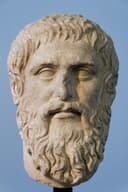
Summary of Symposium by Plato
Symposium is a philosophical dialogue by Plato that explores the nature of love through a series of speeches given by various characters at a banquet. Each speaker offers a distinct perspective on love, ranging from Phaedrus' emphasis on love as a motivating force for honor and courage, to Pausanias' distinction between noble and common love, and Eryximachus' view of love as a universal principle governing harmony in nature and the body. Aristophanes presents a mythological account of human nature and love as the desire for wholeness, while Agathon praises love as the youngest and most beautiful god. Socrates, recounting the teachings of Diotima, presents love as a pursuit of the eternal possession of the good and the beautiful, culminating in the love of pure, abstract beauty and wisdom. The dialogue concludes with the arrival of Alcibiades, whose drunken encomium of Socrates illustrates the complex interplay of passion, virtue, and human imperfection.
The Symposium blends rhetoric, mythology, philosophy, and irony to reveal love as a multifaceted force that spans from physical desire to the highest intellectual and spiritual aspirations. Plato uses the speeches to prepare the ground for Socrates' philosophical synthesis, which elevates love to the pursuit of immortality through procreation in body and mind, and ultimately to the contemplation of eternal truth and beauty. The dialogue reflects on the unity of reason and passion, the moral and intellectual dimensions of love, and the human longing for completeness and transcendence. It remains a foundational text in Western thought, illustrating the complexity of love as both a personal experience and a cosmic principle.