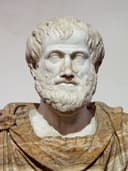
Rhetoric by Aristotle
Aristotle defines rhetoric as "the faculty of observing in any given case the available means of persuasion." Unlike the Sophists, who taught persuasion as a tool for winning regardless of truth, Aristotle treats rhetoric as a counterpart to dialectic — a legitimate discipline for making the truth prevail when certainty is unavailable and judgment depends on argument.
The core of the work is the three modes of persuasion. Ethos is the character and credibility of the speaker: "We believe good men more fully and more readily than others." Pathos is the emotional state of the audience: anger, pity, fear, and confidence all shape how evidence is received. Logos is the logical structure of the argument itself — the enthymeme (a rhetorical syllogism where the audience supplies the missing premise) is Aristotle's primary instrument.
Book II is a remarkable work of practical psychology. Aristotle analyzes the emotions one by one — what causes anger, what calms it; what produces pity, what produces indignation — because a speaker who understands the audience's emotional state can address it honestly rather than merely exploiting it. Book III turns to style and arrangement: clarity is the cardinal virtue of prose, and obscurity is not depth but failure.
The Rhetoric matters to PKL as the origin of systematic persuasion theory. Every modern framework for building arguments — from legal briefs to pitch decks — descends from Aristotle's three modes. Understanding ethos, pathos, and logos is not about manipulation; it is about recognizing which dimension of an argument is strongest, which is weakest, and what the audience actually needs to hear.