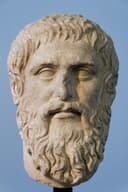
Summary of The Republic by Plato
The Republic is Plato's extensive philosophical dialogue centered on the search for justice and the ideal state. The work begins with a discussion on the nature of justice, initiated by Cephalus and further debated by Socrates, Polemarchus, and Thrasymachus, before being expanded by Glaucon and Adeimantus. Plato uses these dialogues to explore justice not only as a social virtue but also as an inner harmony within the individual soul. The ideal state is constructed through a detailed examination of education, morality, and governance, culminating in the vision of a society ruled by philosopher-kings where communal living and the pursuit of the good are paramount. The dialogue also addresses the degeneration of political systems from aristocracy to tyranny and critiques poetry and art as imitations removed from truth.
Throughout the dialogue, Plato employs allegory and dialectic methods to deepen the philosophical inquiry, notably in the middle books where the theory of forms and the idea of the good are elaborated. The characters, including Socrates, Glaucon, and Adeimantus, represent various stages of moral and intellectual development, reflecting the complexity of human nature and society. The Republic also anticipates later philosophical and political thought, influencing concepts of education, governance, and metaphysics. While the dialogue blends myth, philosophy, and political theory, it ultimately presents justice as the harmony of the individual and the state, grounded in the pursuit of the highest good and the cultivation of virtue.