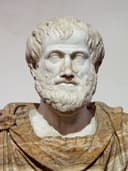
Nicomachean Ethics by Aristotle
The Nicomachean Ethics asks the most practical question in philosophy: what does it mean to live well? Aristotle's answer is not a set of rules but a way of developing judgment. The good life — eudaimonia — is not a feeling but an activity: living in accordance with virtue, exercised over a complete life.
Aristotle's most important contribution is the concept of phronesis — practical wisdom. Phronesis is not theoretical knowledge (knowing that honesty is a virtue) but the ability to perceive what this particular situation requires and act on it. It cannot be taught through principles alone; it develops through experience, practice, and reflection. A person with phronesis knows when courage becomes recklessness, when generosity becomes wastefulness, when honesty becomes cruelty. The judgment is always contextual.
This leads to Aristotle's doctrine of the mean: every virtue sits between two vices — one of excess, one of deficiency. Courage lies between cowardice and recklessness. Generosity lies between stinginess and profligacy. The mean is not a mathematical midpoint but the right response for the right situation, determined by practical wisdom. "It is no easy task to find the middle," Aristotle writes. "Anyone can get angry — that is easy. But to be angry with the right person, to the right degree, at the right time, for the right purpose, and in the right way — that is not easy."
Aristotle also insists that virtue is a hexis — a stable disposition built through repeated action. You become courageous by practicing courage, just as you become a builder by building. Character is not something you have; it is something you do, consistently, until it becomes who you are.
For PKL, the Ethics provides the philosophical foundation for judgment-building. Where Kahneman maps how judgment fails, Aristotle maps how judgment develops. His framework — that wisdom is particular, not general; that it requires practice, not just principles; that context determines the right action — is the deepest answer in the corpus to "how do I make better decisions?"