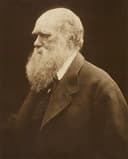
Summary of The Descent of Man and Selection in Relation to Sex, Vol. I by Charles Darwin
In The Descent of Man, Charles Darwin explores the evidence supporting the theory that humans have descended from lower animal forms through the process of evolution. He examines the close anatomical, embryological, and physiological similarities between humans and other mammals, particularly the anthropoid apes, highlighting homologous structures, rudimentary organs, and developmental stages that reveal common ancestry. Darwin discusses how humans share many diseases, parasites, and biological functions with other animals, reinforcing the idea of a shared evolutionary origin. He also addresses the variability and inheritance of traits in humans, the existence of races with slight differences, and the implications of natural selection and sexual selection in shaping human development and diversity.
Darwin further delves into the concept of rudimentary organs in humans, such as vestigial muscles, the external ear's limited mobility, the nictitating membrane, body hair, and the vermiform appendix, which serve as evidence of evolutionary remnants from ancestral species. He notes the variability and occasional reappearance of these rudiments, supporting the principle of gradual change over time. The book also touches on the intellectual and moral faculties of humans compared to lower animals, the development of human traits through natural and sexual selection, and the genealogical position of humans within the animal kingdom. Overall, Darwin's work provides a comprehensive argument for human evolution grounded in comparative anatomy, embryology, and the principles of selection.