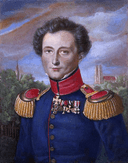
Summary of On War by Carl von Clausewitz
On War is a comprehensive and philosophical examination of war as an extension of political policy, emphasizing its nature as a complex interplay of force, strategy, and human factors. Clausewitz argues that war is not governed by fixed laws but is influenced by chance, friction, and the moral and psychological elements of leadership and the army. He distinguishes between wars aimed at the complete overthrow of an enemy and those with limited objectives, highlighting the importance of understanding the political context and the strategic goals behind military actions. The work stresses the necessity of readiness and rapid mobilization, reflecting on historical examples and the evolution of warfare, including the impact of technological advancements on tactics and the concentration of firepower.
The book also addresses the challenges of developing a scientific theory of war, acknowledging the difficulties in achieving a systematic and universally applicable framework due to the unpredictable and dynamic nature of conflict. Clausewitz’s writings, compiled posthumously and edited by his wife Marie von Clausewitz, combine philosophical inquiry with practical military experience, aiming to provide enduring insights rather than transient rules. His ideas have profoundly influenced military thought, particularly in Europe, shaping the organization, training, and strategic doctrines of armies. Ultimately, On War presents war as a human endeavor deeply intertwined with politics, requiring leaders to balance rational calculation with the unpredictable realities of combat.