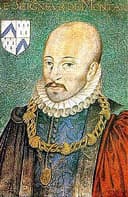
Essays of Michel de Montaigne
Montaigne invented the essay form — the word itself comes from essayer, to try or to test. His essays are not arguments that march toward a conclusion. They are acts of thinking on the page: he picks up a subject, turns it over, contradicts himself, digresses, and arrives somewhere he didn't expect. The method is the message. To read Montaigne is to watch a mind examine itself in real time.
His signature move is radical self-questioning. "Que sais-je?" — What do I know? — is not a rhetorical flourish but an operating principle. Montaigne questions custom ("most of our opinions are taken on trust and on credit"), authority ("the plague of man is the opinion of knowledge"), and his own certainties. He catches himself in contradictions and reports them honestly rather than smoothing them over. This makes him the first great practitioner of intellectual humility as a discipline, not just a posture.
Montaigne's essays cover an extraordinary range — friendship, cannibals, education, death, experience, vanity, thumbs — but the recurring subject is always himself as a specimen of the human condition. He uses the particular to reach the universal. His essay "Of Experience" argues that no amount of theory substitutes for examining your own life carefully: "I study myself more than any other subject. That is my metaphysics; that is my physics."
For PKL's purposes, Montaigne matters in two ways. First, as a thinker: he is the original practitioner of the examined life, centuries before cognitive bias research formalized what he did by instinct. Second, as a craftsman: his prose style — digressive, personal, self-correcting — is the foundation of the modern essay. Understanding how Montaigne builds an essay teaches you something that rules and templates cannot.